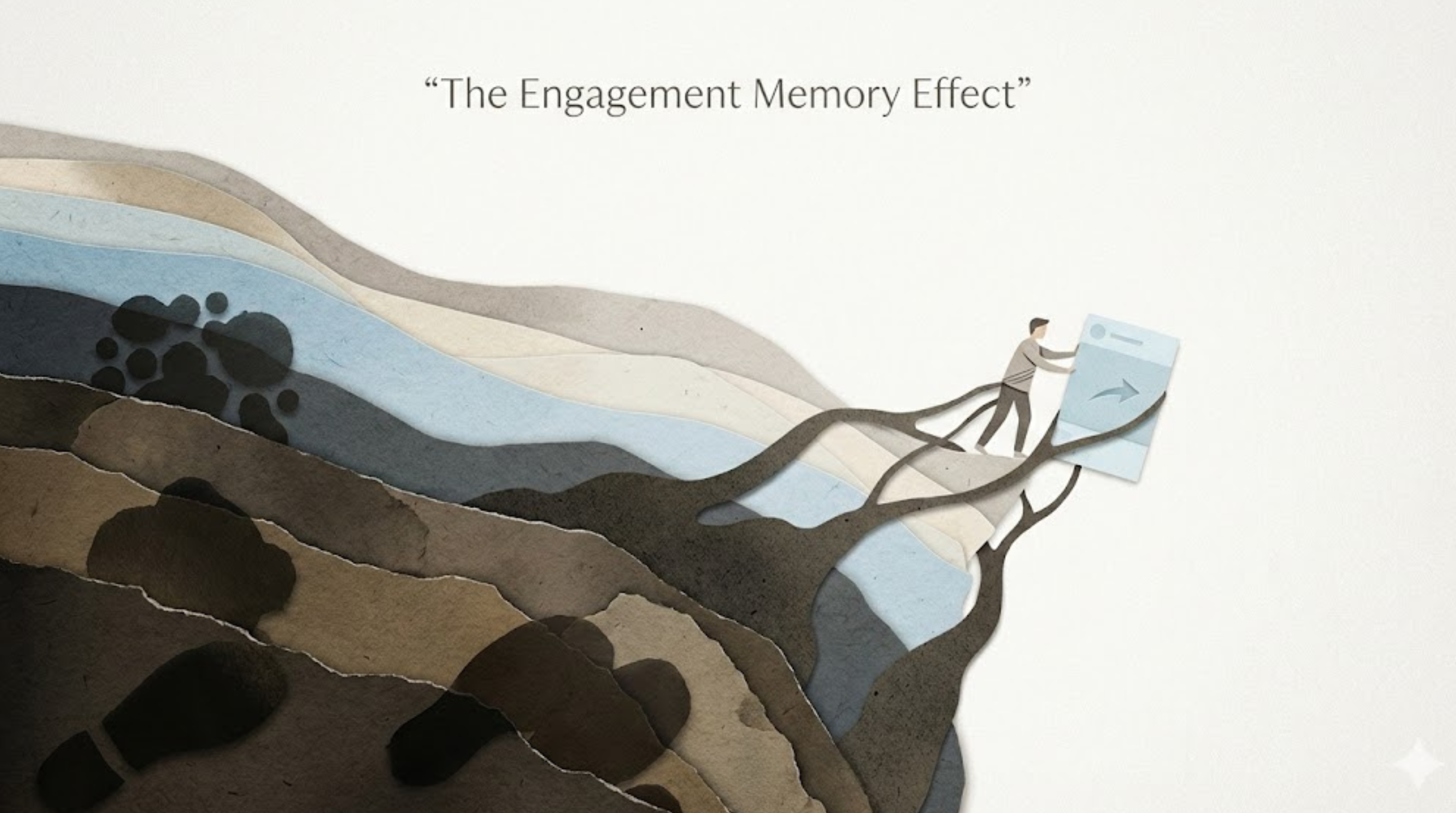
The Engagement Memory Effect: How Past Posts Decide Your Reach in 2026
Have you ever noticed this?
You improve your content.
Your editing gets better.
Your ideas are clearer.
But somehow… your reach keeps getting worse.
New posts don’t move. Engagement feels capped. Even when you know the content is better, the results say otherwise.
This is one of the most frustrating experiences for creators in 2026 — and the reason isn’t your current post.
It’s your past posts.
Welcome to the Engagement Memory Effect — the silent system that decides how far your content goes before anyone even sees it.
What the Engagement Memory Effect Really Is
The Engagement Memory Effect means this:
Social media algorithms remember how people reacted to your previous posts and use that history to decide how much exposure your future posts deserve.
In 2026, platforms don’t judge content in isolation anymore.
They judge accounts.
Every post you publish adds data to your profile:
- Did people engage quickly?
- Did they scroll past?
- Did they comment?
- Did they save?
- Did interaction die early?
That history becomes a baseline expectation for your next post.
So when you publish again, the algorithm already has an opinion.
Why This Changed in 2026
Years ago, each post was tested more independently.
Now, that approach is impossible.
1. Content Volume Is Too High
There is simply too much content being uploaded every second.
AI tools, auto-posting systems, content farms — the volume forced platforms to filter aggressively.
The easiest filter?
Account history.
2. Algorithms Prioritize Predictability
Platforms care about one thing above all:
Keeping users scrolling.
If your past posts didn’t hold attention, the algorithm assumes your future ones won’t either — until proven otherwise.
3. Engagement History Is a Trust Signal
High engagement history = safe bet.
Low engagement history = risk.
So new posts from low-trust accounts are shown to fewer people by default.
Not because they’re bad — but because the system is cautious.
Why Creators Feel “Stuck” Even When Content Improves
This is where the frustration really hits.
Creators often say:
- “My content is better than before”
- “I’m improving every week”
- “Why is my reach still dropping?”
Because improvement doesn’t erase memory.
If your last 10–20 posts had:
- weak early engagement
- low interaction
- fast scroll-through rates
…your next post starts at a disadvantage.
The algorithm expects underperformance — and limits distribution accordingly.
Why Deleting Old Posts Doesn’t Fix Anything
Many creators panic and delete low-performing posts.
This feels logical.
It does nothing.
Engagement memory is not stored in your feed.
It’s stored in your account behavior profile.
Deleting posts doesn’t erase:
- engagement patterns
- audience response trends
- velocity data
- retention behavior
In some cases, mass-deleting actually hurts trust even more.
How Long Does Algorithm “Memory” Last?
This is the uncomfortable part.
There is no fixed reset time.
Engagement memory fades only when new, stronger signals replace old ones.
That means:
- one good post isn’t enough
- sporadic spikes don’t reset history
- consistency matters more than virality
The system needs repeated proof that something has changed.
Why New Creators and Small Accounts Suffer More
Big creators already have strong engagement memory.
Even if they post something average:
- early likes arrive
- comments follow
- trust remains intact
Small creators don’t have that cushion.
One weak streak can drag performance down for weeks.
This is why growth in 2026 feels slow, heavy, and unfair.
How Creators Reset Engagement Memory (What Actually Works)
There is a way out — but it requires intention, not volume.
1. Stop Flooding the Algorithm
Posting more weak content makes memory worse.
Every underperforming post reinforces the same signal:
“This account doesn’t create reactions.”
Slowing down is often the first step to recovery.
2. Prioritize Early Engagement Above Everything
Engagement memory is heavily influenced by how posts start, not how they finish.
Strong early signals tell the algorithm:
“This account is changing.”
This is why creators focus on early momentum instead of chasing total views.
Many creators use small, controlled engagement support during this phase — not to fake popularity, but to break the low-engagement loop.
Platforms like BulkCheapService.com are used here strategically to:
- prevent posts from launching dead
- generate early interaction signals
- help the algorithm reassess the account
Momentum rewrites memory.
3. Create Fewer Posts With Clear Interaction Triggers
Content that asks nothing gets nothing.
Posts that:
- ask opinions
- spark emotion
- create tension
- invite response
generate stronger signals than “perfect” content that feels distant.
4. Let Each Post Fully Stabilize
Posting again too quickly can interrupt evaluation.
Give posts time to:
- collect engagement
- reach secondary audiences
- send clear signals
Algorithms need clarity, not chaos.
5. Be Consistent in Signal Quality, Not Quantity
Consistency doesn’t mean daily.
It means:
- similar engagement patterns
- steady interaction
- predictable behavior
That’s how trust rebuilds.
Where BulkCheapService.com Fits Naturally
The hardest part of resetting engagement memory is the beginning.
Silence kills recovery.
BulkCheapService.com helps creators:
- avoid dead launches
- create early interaction
- improve engagement velocity
- replace old weak signals with new strong ones
It doesn’t replace good content.
It supports the moment where algorithms decide whether to keep believing the past — or update their opinion.
The Truth About Growth in 2026
Growth is no longer about “this post.”
It’s about what the algorithm remembers about you.
If you feel stuck despite improving, you’re not failing.
You’re carrying old signals forward.
Once you understand engagement memory, everything makes sense:
- why reach drops suddenly
- why improvements don’t show
- why consistency feels unrewarded
And once you address it intentionally, growth becomes possible again.
Final Thought
In 2026, your content doesn’t speak alone.
Your history speaks first.
Change the signals — and the story changes.
FAQ
Can one viral post reset engagement memory?
Rarely. Sustained signals matter more than spikes.
Does engagement memory apply across platforms?
Yes. Every major platform uses account-level history now.
Is low reach always permanent?
No, but it requires deliberate correction.
Does early engagement really matter that much?
Yes. It’s one of the strongest memory-updating signals.
Is deleting posts helpful?
No. It often makes things worse.
Will engagement memory become more important in the future?
Almost certainly. Platforms are moving toward trust-based ranking systems.