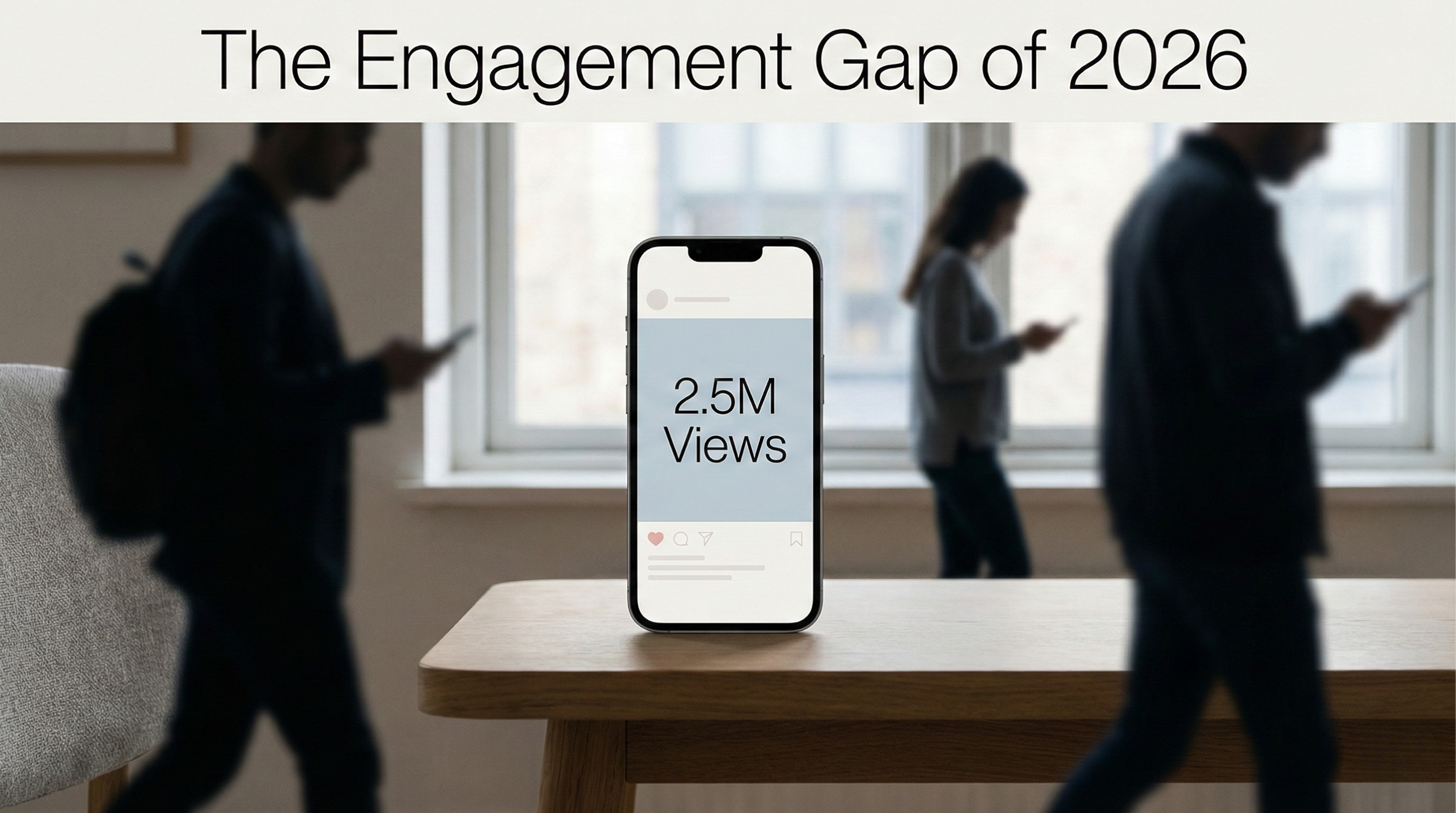
The Engagement Gap of 2026: Why People Watch but Don’t Interact
You post a video.
It gets views. Sometimes a lot of views.
But the likes are low.
Comments are almost nonexistent.
Saves? Barely any.
It feels confusing, even discouraging. If people are watching, why aren’t they reacting?
Welcome to one of the biggest problems creators face in 2026: the engagement gap.
This gap — where people consume content silently without interacting — is quietly destroying reach, authority, and long-term growth across every platform. And most creators don’t even realize what’s happening until their reach slowly collapses.
Let’s break it down honestly.
What the “Engagement Gap” Really Means
The engagement gap happens when content gets views without actions.
People:
- watch
- scroll
- move on
They don’t:
- like
- comment
- save
- share
From a human point of view, that might feel okay.
From an algorithm’s point of view, it’s a red flag.
In 2026, views alone mean almost nothing. Algorithms don’t reward passive consumption anymore. They reward interaction — because interaction proves interest.
When people watch but don’t act, platforms assume the content wasn’t valuable enough to respond to. And that assumption follows your account into future posts.
Why People Watch but Don’t Interact in 2026
This behavior didn’t come out of nowhere. It’s the result of how social media has evolved.
1. People Are Mentally Exhausted
Feeds are endless now. AI content, short clips, ads, recommendations — everything blends together.
Most users scroll in consumption mode, not participation mode.
They watch without thinking. Interacting feels like effort.
2. Content Feels Disposable
Because there is so much content, nothing feels special anymore.
Even good videos are treated like background noise.
People think, “Nice video” — and keep scrolling.
3. AI Content Changed Viewer Behavior
AI-generated and heavily edited content looks perfect, but it also feels impersonal.
Viewers are trained to consume quietly. They don’t feel a human pull to respond the way they once did.
4. No Clear Reason to Interact
Many posts don’t give people a reason to act.
No question.
No emotion.
No tension.
No invitation.
So viewers do the easiest thing: nothing.
5. Algorithms Taught Users to Be Passive
For years, platforms rewarded endless scrolling.
Users adapted.
Now they consume first and react only when something really moves them.
Why Algorithms Hate the Engagement Gap
Here’s the harsh truth:
A post with 1,000 views and 5 likes performs worse than a post with 200 views and strong interaction.
Why?
Because algorithms are trying to answer one question:
“Did this content create a response?”
If the answer is no, the algorithm assumes:
- low relevance
- weak emotional impact
- poor audience match
And it limits distribution.
Worse — repeated engagement gaps lower your account’s trust and authority score, meaning future posts are tested more harshly.
This is how creators slowly fall into low-reach cycles without doing anything “wrong.”
Why the Engagement Gap Is Worse in 2026 Than Ever Before
Several things made this problem explode in 2026:
- AI content flooding feeds
- More creators than viewers
- Platforms prioritizing paid and high-authority accounts
- Faster algorithm decisions
- Shorter testing windows
- Pay-to-play models becoming normal
The result?
Passive views are no longer enough to survive.
How Creators Can Close the Engagement Gap
This is the part that matters.
Closing the engagement gap is not about begging for likes or using cheap tricks. It’s about understanding psychology, timing, and momentum.
1. Stop Chasing Views — Chase Reactions
A smaller audience that reacts is more powerful than a larger audience that watches silently.
Focus on:
- saves
- comments
- shares
- meaningful reactions
These signals push reach far more than raw views.
2. Design Content for a Response
Every post should answer this question:
“What should the viewer do after watching this?”
It could be:
- agree or disagree
- answer a question
- relate emotionally
- save it for later
- share with someone
If there’s no natural response, engagement will stay low.
3. Fix the Silent First Minutes
The first moments after posting matter more than ever.
If a post starts with silence, people feel less inclined to interact.
If it already has activity, interaction feels “safe.”
This is why many creators now use small, early engagement signals to break the silence effect.
Platforms like BulkCheapService.com are used for this exact reason — not to fake popularity, but to create initial momentum so real users are more likely to engage.
People interact where interaction already exists. That’s human behavior.
4. Use Emotion, Not Perfection
Perfect visuals don’t trigger interaction anymore.
Emotion does:
- frustration
- relief
- curiosity
- humor
- honesty
Human moments close the engagement gap faster than polished content.
5. Invite, Don’t Beg
There’s a difference between begging for engagement and inviting it.
Questions, opinions, and shared experiences work far better than “like this post” requests.
Where BulkCheapService.com Fits Naturally
In a feed where most people watch silently, breaking the initial silence is critical.
BulkCheapService.com helps creators:
- generate early interaction
- avoid posts dying quietly
- encourage real viewers to respond
- improve authority signals over time
It’s not a replacement for good content.
It’s a support system for a reality where silence kills reach.
In 2026, momentum creates interaction — not the other way around.
Final Thoughts: Views Are Easy. Engagement Is Everything.
The biggest mistake creators make in 2026 is celebrating views while ignoring interaction.
Views don’t build authority.
Views don’t guarantee reach.
Views don’t trigger growth.
Engagement does.
If people are watching but not interacting, your content isn’t failing — your strategy is incomplete.
Once you understand the engagement gap and actively work to close it, growth becomes predictable again.
FAQ
Why do people watch but not like or comment?
Because scrolling has become passive. Interaction requires emotional or social motivation.
Are views useless now?
No, but they are weak signals on their own. Interaction is what drives distribution.
What’s the most important engagement type in 2026?
Saves and comments carry more weight than likes.
Can early engagement really change viewer behavior?
Yes. People are more likely to interact with content that already feels active.
Is micro-boosting safe when done correctly?
When used in small, realistic ways to trigger momentum, it aligns with natural behavior.
Will the engagement gap get worse in the future?
Most likely, yes. As content volume increases, interaction will matter even more.